
WARDOGS Maps
One huge Eastern European theatre, a 4 km² argument, and 252 km² of approach you still have to survive.
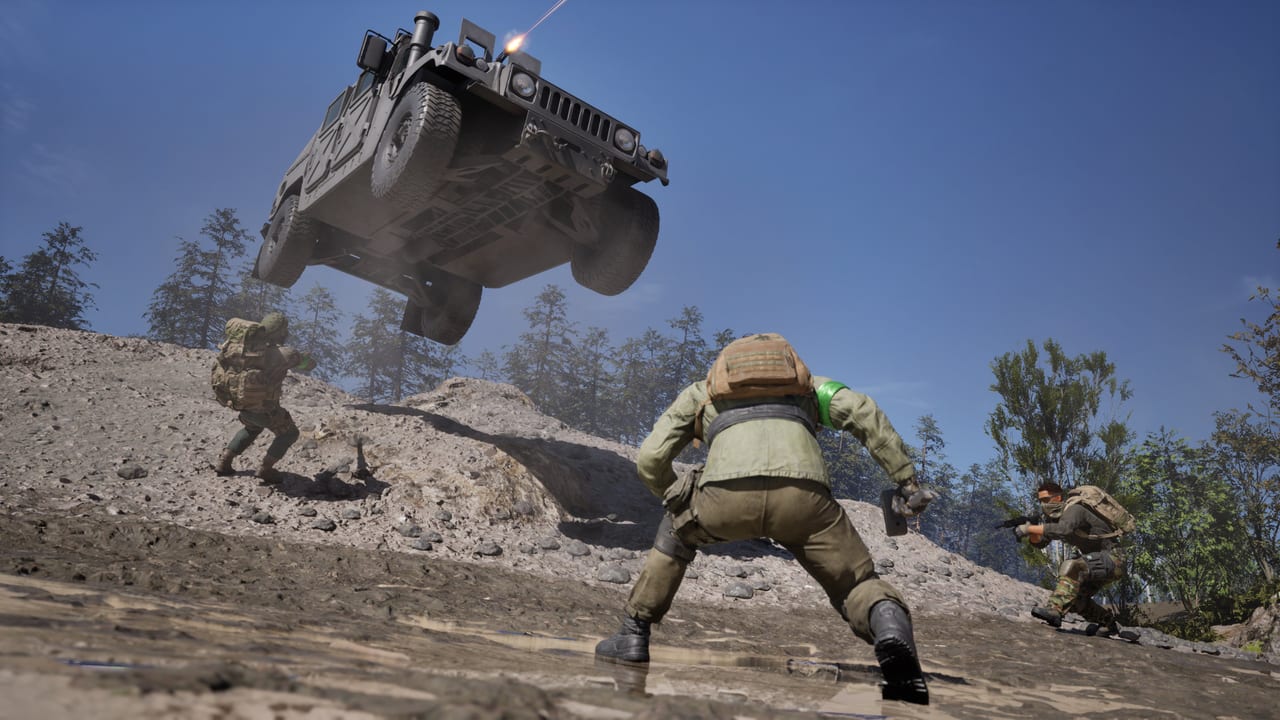
WARDOGS does not rotate a tiny 5v5 arena. Official copy describes a 256 km² militarised sandbox in the derelict industrial mountains of Eastern Europe — community shorthand is Kolchia — with a randomised 2×2 km Control Zone that decides the match. BULKHEAD has also said Early Access launches with three maps and three variations each. Those two facts live together: you learn a theatre, then you learn that tonight’s hill is not last night’s hill.
This page is how to think about space. Scoring rules stay on how to play. Vehicle choice stays on vehicles. Tower locations change with the zone; the codes page covers the puzzle, not a pin on a static callout sheet.
The 4 km² that matter
The Control Zone is 2×2 km. That is large for a “hill” and small for a 16×16 km (256 km²) world. Everything else is approach: roads, rivers, foundries, residential blocks, ridgelines, and the helicopter lanes that make new players scream. If you spend eight minutes looting a distant town, the tick happened without you.
Because the zone randomises, landmark knowledge beats memorised bomb sites. Learn building types, not a single meta corner:
- Industrial / foundry. Vertical interiors, loud destruction, long machine halls that tanks love and infantry hate without smoke.
- Residential streets. Stairwells, towers, and the shotgun ranges the weapon tier list cares about.
- Valleys and rivers. Vehicle country. Infantry without a ride is a loot drop.
- High ground around the square. DMR and mortar country. Useful for denial, poisonous if your whole faction camps here and lets the other colour stand in the circle.
Press-kit scenes BULKHEAD shipped (Destruction, Foundry, House Interior, Residential Street, River, Tank, Littlebird, Flying) are a better mood board than any fan-drawn callout map that claims to be complete before launch.
Destruction is a layout tool
Rocket buildings. Tank a row of apartments. The world is supposed to change. That means:
- A “safe” tower can become a parking lot.
- FOBs you built can be deleted; rebuild or move.
- Sound and dust give you away. Destruction is information.
- Performance dips when a neighbourhood comes down. If you are on minimum specs, do not be the person who artillery-wipes the only town your GPU could draw.
Construction is the other half. Hammers, fortifications, and FOBs create new cover inside the current zone. They are not a second map you get to play instead of the objective.
How to approach a randomised zone
- Spawn, buy a loadout you can afford, look at the zone indicator before you wander.
- Choose a vehicle for the distance. Two kilometres of open ground is a Humvee problem, not a sprint problem.
- Pick an edge that is not the obvious road everyone else is dying on. Three-team fights cluster on the easy approach.
- Stage on the rim, then enter as a group for the next tick. Staggered solos feed whoever already stacked.
- Identify towers early if you intend to run codes.
- If the Hot Zone pulls, move. Pride of “we held this house” is how you watch the census flip.
Variations, day-night, and what is still moving
Three maps with three variations each is the Early Access content promise, not a finished atlas. Lighting, weather, and exact POI names will keep shifting. Linux/Proton support is being worked on and is not a reason to assume Steam Deck is a supported map-playing device yet.
Community servers are part of BULKHEAD’s PC-first pitch. Custom layouts, if they arrive, will belong in updates. Until then, treat Kolchia as one war with moving hills.
Navigation habits that save money
- Mark the zone, not a random firefight on the edge of the 256.
- Carry a parachute if air travel is live.
- Do not chase a kill 800 metres outside the square unless you are already rich.
- Learn compass calls. Proximity VOIP plus “46 northeast” is how stacks actually move.
- After death, check whether the zone still matches the mental picture you died with. It can pull.
When you can read a valley and know whether you need a Bobcat, a helicopter, or a walk through buildings, you are ready for how to win.
Related pages
Frequently Asked Questions
Quick answers to the most common WARDOGS questions.
How big is the WARDOGS map?
Official material describes a 256 km² sandbox with a randomised 2×2 km Control Zone. Early Access is also described as three maps with three variations each.
Does the Control Zone stay in the same place?
No. The zone is randomised per match, and tower codes can pull the inner Hot Zone during a match.
Can I destroy buildings?
Yes. Combined arms and explosives change the layout. That is a tactic and a performance cost — see system requirements.
Is there a minimap with every tower labelled?
Use the in-game objective view for live towers. This wiki does not publish a fake complete callout atlas for a randomised zone. Learn approach types on this page and scoring on how to play.